
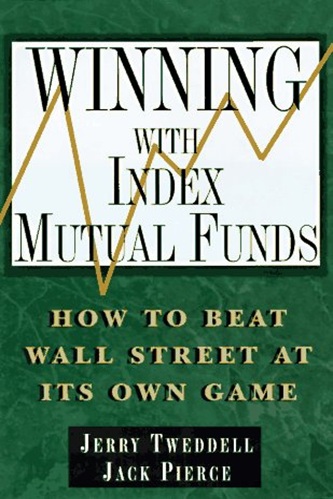
Winning With Index Mutual Funds: How to Beat Wall Street at Its Own Game
$15.26
Winning With Index Mutual Funds presents a structured framework for individual investors seeking to improve long-term investment outcomes through low-cost, systematic strategies. The book challenges traditional reliance on professional fund managers and brokerage-driven investment approaches, arguing that most actively managed solutions fail to justify their costs through consistent performance.
At its core, the book explains the mechanics and rationale of index fund investing—portfolios designed to replicate market benchmarks rather than outperform them. By focusing on cost efficiency, diversification, and disciplined allocation, the authors position indexing as a practical alternative to speculative or high-fee investment products commonly promoted within the financial industry.
The methodology emphasizes eliminating structural disadvantages faced by retail investors, including excessive fees, poor timing decisions, and overdependence on financial intermediaries. Through a step-by-step progression, the book outlines how investors can transition away from complex, high-cost strategies toward a simplified portfolio model grounded in asset allocation and long-term consistency.
In addition, the book integrates behavioral and psychological considerations, addressing common investor errors such as chasing performance, misunderstanding risk, and reacting emotionally to market cycles. It frames index investing as both a financial and behavioral discipline, enabling investors to focus on controllable variables such as allocation, costs, and rebalancing.
Overall, the work functions as both a critique of conventional Wall Street practices and a practical guide to building efficient, self-managed investment portfolios using index funds.
✅ What You’ll Learn:
- How index mutual funds replicate market performance and reduce costs
- Why most actively managed funds underperform after fees
- The structural disadvantages of broker-driven investment strategies
- How to eliminate high-cost investment products and unnecessary fees
- Core principles of asset allocation and portfolio construction
- How to build and maintain a diversified index fund portfolio
- The role of rebalancing in long-term portfolio performance
- Behavioral pitfalls that negatively impact investor returns
- How to evaluate risk without relying on speculation
💡 Key Benefits:
- Reduces dependency on financial advisors and brokers
- Provides a cost-efficient framework for long-term investing
- Simplifies portfolio management through systematic strategies
- Improves consistency of returns by eliminating timing errors
- Enhances decision-making through evidence-based investing principles
👤 Who This Book Is For:
- Beginner to intermediate investors seeking a structured approach
- Individuals transitioning from active trading to long-term investing
- Investors looking to reduce fees and improve net returns
- Those interested in passive investing and portfolio optimization
📚 Table of Contents:
- The First Step: Stop Paying for Bad Advice
- The Second Step: Eliminate the Costly Alternatives
- How and Why Index Funds Work for the Investor
- Bonds, Bond Funds, and Bond Index Funds
- Asset Allocation
- Picking the Funds
- The Index Fund Universe
- Doing the Paperwork
- Final Thoughts
Winning With Index Mutual Funds: How to Beat Wall Street at Its Own Game By Jerry Tweddell, Jack Pierce
| Author(s) | |
|---|---|
| Product Type | Ebook |
| Format | |
| Skill Level | Beginner to Intermediate |
| Pages | 224 |
| Publication Year | 1997 |
| Delivery | Instant Download |
1 review for Winning With Index Mutual Funds: How to Beat Wall Street at Its Own Game
Only logged in customers who have purchased this product may leave a review.
Related products

Giovanni Huffman (verified owner) –
As an excellent review of index fund investing, I give this book an A.
Tweddell and Pierce’s book was one of the first books about index fund investing. They published this book in 1997, prior to the index fund 1999 peak in popularity.
They do an excellent job of explaining index mutual funds and why they are advantageous for most investors.
They point out the paradox that a person is better off seeking the help of an expert for most things including medical doctors, car mechanics, and plumbers. Financial advice is one area where seeking out experts is not necessarily the right way to increase your net worth.
The key point of their book is that most active fund managers can not beat the indexes due to higher costs. Another key point is that by adopting a buy-and-hold index fund strategy, investors will reap the returns of the stock market because they will quit their futile efforts at market timing. They point out that indexing is even more important in bonds because expenses of actively managed bond funds eat up a lower starting return for bonds than stocks.
They point out the importance of asset allocation and demonstrate how an indexing strategy can be used to implement your desired asset allocation strategy.