
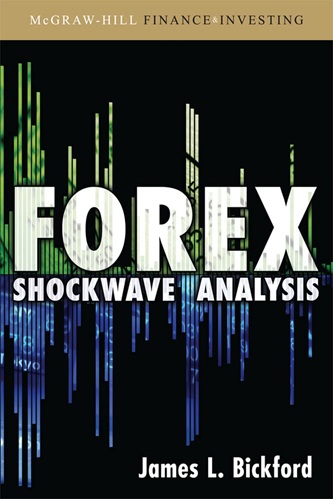
Forex Shockwave Analysis
$23.45
Forex Shockwave Analysis introduces a market-reading framework designed to identify and trade powerful currency movements driven by imbalance, momentum shifts, and volatility expansion. James L. Bickford focuses on understanding why sudden directional moves occur in the Forex market and how traders can position themselves to respond with structure rather than reaction. The book treats major price surges as “shockwaves”—events that propagate through the market when order flow, sentiment, and liquidity align.
Rather than relying on lagging indicators, the methodology emphasizes price behavior, volatility changes, and market timing. Bickford explains how periods of compression often precede explosive movement and why recognizing these transition phases is critical for Forex traders. The analysis centers on anticipation and preparation, not prediction—waiting for objective confirmation before engaging.
A key contribution of the book is its emphasis on trade planning around high-impact moments. Entries, exits, and risk parameters are framed to accommodate rapid price movement while preserving capital. The author stresses that shockwave-style moves offer opportunity precisely because they are rare; patience and selectivity are therefore central to the approach.
Throughout the book, discipline and risk awareness are reinforced. Fast markets amplify both profits and mistakes, making predefined rules essential. Forex Shockwave Analysis is positioned as a tactical guide for traders who want to operate decisively during volatility events without abandoning control or process.
This is not a beginner’s introduction to Forex. It is a focused analytical approach for traders seeking to exploit momentum and volatility with clarity, restraint, and professional execution.
✅ What You’ll Learn:
- How volatility compression and expansion create high-impact Forex moves
- Identifying market conditions that precede directional “shockwaves”
- Timing entries during momentum shifts without chasing price
- Structuring trades to manage risk in fast-moving markets
- Developing patience and selectivity for high-quality setups
💡 Key Benefits:
- Provides a framework for trading explosive Forex movements with structure
- Reduces emotional decision-making during volatile conditions
- Enhances timing and market awareness around key transitions
- Complements momentum, breakout, and volatility-based strategies
👤 Who This Book Is For:
- Forex traders with experience in technical analysis and execution
- Traders seeking to refine volatility and momentum timing
- Market participants interested in event-driven price behavior
- Not suitable for complete beginners or passive investors
📚 Table of Contents:
- Fundamental Studies
- Exchange Rate Determinants
- Activity and Range
- Forex Wave Theory
- Shockwave Raw Data
- Shockwave Swing Data
Forex Shockwave Analysis By James L. Bickford
| Author(s) | |
|---|---|
| Product Type | Ebook |
| Format | |
| Skill Level | Intermediate to Advanced |
| Pages | 320 |
| Publication Year | 2007 |
| Delivery | Instant Download |
2 reviews for Forex Shockwave Analysis
Only logged in customers who have purchased this product may leave a review.
Related products







Alijah Duran (verified owner) –
One of the perhaps a dozen intermediate-advanced market books and half that many FOREX books I would consider indispensible. ‘Trading the News’ is the hot FOREX topic today. Forex Shockwave Analysis quantifies the market’s reaction to the news and the sometimes even more useful aftershock. A rare book that bridges the gap between technical and fundamental analysis – and does it very well. Caution: Some deep reading here, but, IMHO, worth the effort.
Carly Reese (verified owner) –
I read Shockwave analysis with an open mind.
Actually, an eager mind willing to discover some scholarly work on forex news-trading, usually one of the first trading methods attempted by the least able, the rank beginner.
I did enjoy reading the book. It is full of different types of charts that I’ve never seen before. I’m not sure that it is very helpful for its promoted purpose, though.
James Bickford displays a great deal of interesting data indicating that the forex markets definitely have a peak volume period at the typical news broadcast periods. With derived time-of-day activity charts. It is very clear that news forces moves in the markets.
Most forex traders already know that. It is nice to see supporting data, and the range charts for non-news vs. news periods was interesting. What was disconcerting to me was my expectations, and probably that of most readers looking for forex edges– were not met.
Maybe I expected too much.
The advertising for the book highlights the newstime price disruptions that forex traders typically observe using a reliable clock and weekly news release guide on the internet. The advertising goes on, “Accurately predicting which way thse spikes will run is the key to impressive earnings in the spot currency market.”
With that pronouncement, I was expecting some help, some method to forecast the direction or facilitate trade of these moves.
There were many chapters on Mr. Bickford’s ideas of forex wave theory, a derivation of Elliott wave theory, with swings determined by his own special algorithm. Even in these chapters there wasn’t much in the way of guidelines that might prove a better way of trading news.
What little direction about trading news “shockwaves” offered is based on the price action from less than 20 consecutive Friday news days. I dare not tell how simple the only suggestions were. With such a small sample size, you could infer any possible action as a valid one with equal validity.
Mr. Bickford did offer a caveat at the end of the book, just before the appendices. (The appendices is no small section. It takes up more than a third of the book with monthly charts and other interesting data that showed me that there is increasing volume in Forex every year, and Fridays have more trade volume due to the news released.) —Back to the author’s caveat. In a small paragraph he admits that this work on news release shockwaves is not an overly exhaustive bit of detailed research on the topic. He reaffirms that what research he is offering is only on the specified Fridays from 8:00 to 10:00 pm in the EUD/USD pair. He offers the work revealed as an introduction to trading the volatile timeframes selected for news trading.
One final part of his advertising is very accurate. He indicates this book contains “Reliable strategies for identifying, analyzing, and categorizing shockwaves in the Forex.” (Note: he did not say that the strategies in the book would help you trade….)
If you like to have scholarly-looking books on your mantle with cool titles, and very impressive, good-looking charts, Forex Shockwave Analysis is your book.
For a practical, how to “get the job done” book, you might want to look at
Day Trading the Currency Market: Technical and Fundamental Strategies To Profit from Market Swings (Wiley Trading)
by Kathy Lien. It has solid suggestions on how to manage the risk of forex trading through many different approaches, including news.
I have no connection with either author. I just trade for myself and am always happy to find out new material available to my industry.