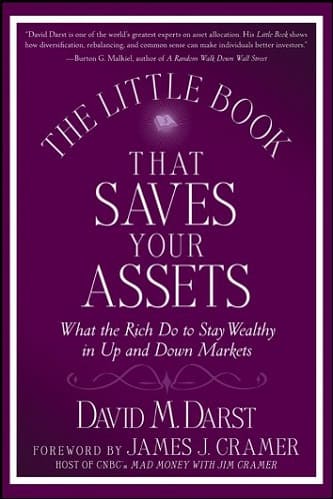
The Little Book that Saves Your Assets: What the Rich Do to Stay Wealthy in Up and Down Markets
$12.24
The Little Book that Saves Your Assets: What the Rich Do to Stay Wealthy in Up and Down Markets will reveal some secrets. David Darst, also known as Mr. Asset Allocations, shows you how to use savvy asset allocation strategies that you can use to invest like the rich do. This dynamic and easy-to-understand book allows you to rethink your asset allocation strategies and make the leap from mediocre to stellar returns.
Introduction:
Simply stated, you need asset allocation for three main reasons. First, by diversifying your investments among several asset classes so that some are thriving regardless of the economic and financial environment, asset allocation helps you create and grow wealth. Second, by focusing on portfolio protection and risk as well as on return, asset allocation can help mitigate losses and contain the risks of an investment. Third, by inciting you with some degree of regularity to face reality, take action, and rebalance to your long – term weightings, asset allocation begets mental fortification and psychological stability.
Asset allocation represents a means of making your investment money work for you, instead of working on you. Asset allocation is grounded in flexibility, realism, preparedness, and self – knowledge. Asset allocation prevents you from becoming dogmatically wedded to a small number of asset classes or investment approaches, which do well for a certain period of time and then languish — whether they be commodities, real estate, cash, junk bonds, option strategies, emerging market stocks, or large – cap U.S. growth companies. Asset allocation relies on such tools as diversification, the tendency of assets to even out their performance over time, rebalancing, and pure common sense to take advantage of the normal cycles of life as well as the occasional periods of euphoria and despair, which have occurred sporadically in markets of every type throughout recorded history. To sum up, asset allocation is the sine qua non of long – term investment success, and success in asset allocation requires:
- Facing yourself
- Selecting someone who likes and knows you, your dreams, hopes, fears, biases, and addictions
- Choosing people who know markets, have perspective, and understand investment value
Contents:
- We All Do It (Even if We Don’t Realize It)
- Everyone Needs an Uncle Frank
- Building Your House
- Parts of the Whole—Combining Dreams into a Plan
- Two Strategies to Win the Battle for Investment Survival
- Do You Know Where You Are Going?
- Mix, Don’t Match
- Our Minds, Our Selves
- The Jockey Matters as Much as the Horse
- Riding Out Storms
- Build Your House on These Rocks
- Count to Zen
- Seven Quick Ways to Ruin
- The Road Less Traveled that You Should Take Right Now
The Little Book that Saves Your Assets: What the Rich Do to Stay Wealthy in Up and Down Markets By David Darst pdf
| Author(s) | |
|---|---|
| Format | |
| Pages | 240 |
| Publication Year | 2008 |
Related products